Where it comes from. Hasami, a valley town in Nagasaki that has fired porcelain for over 400 years. Its makers built their reputation on bowls for ordinary homes, which is why Hasami porcelain is light, hard-wearing and plain in the best sense.
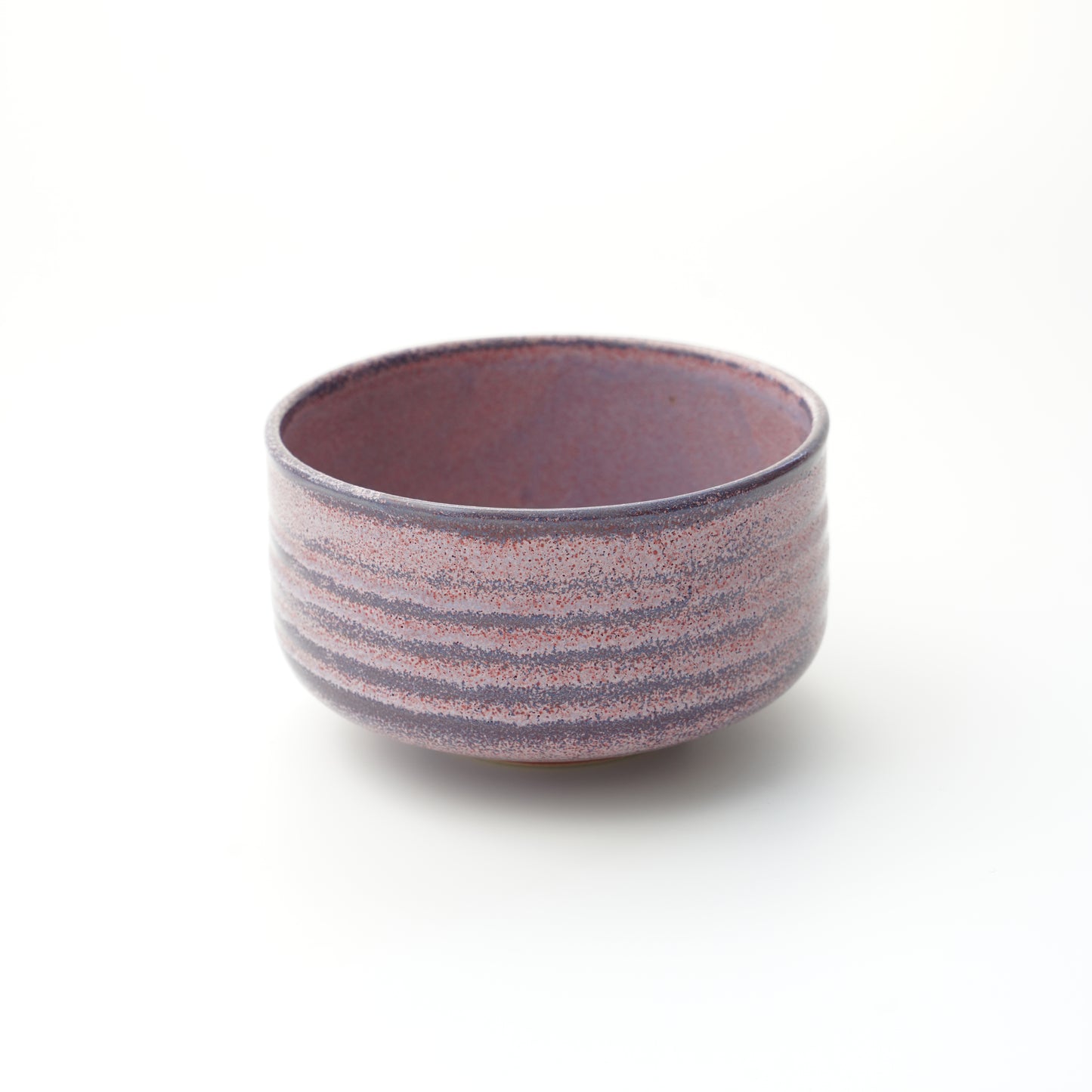
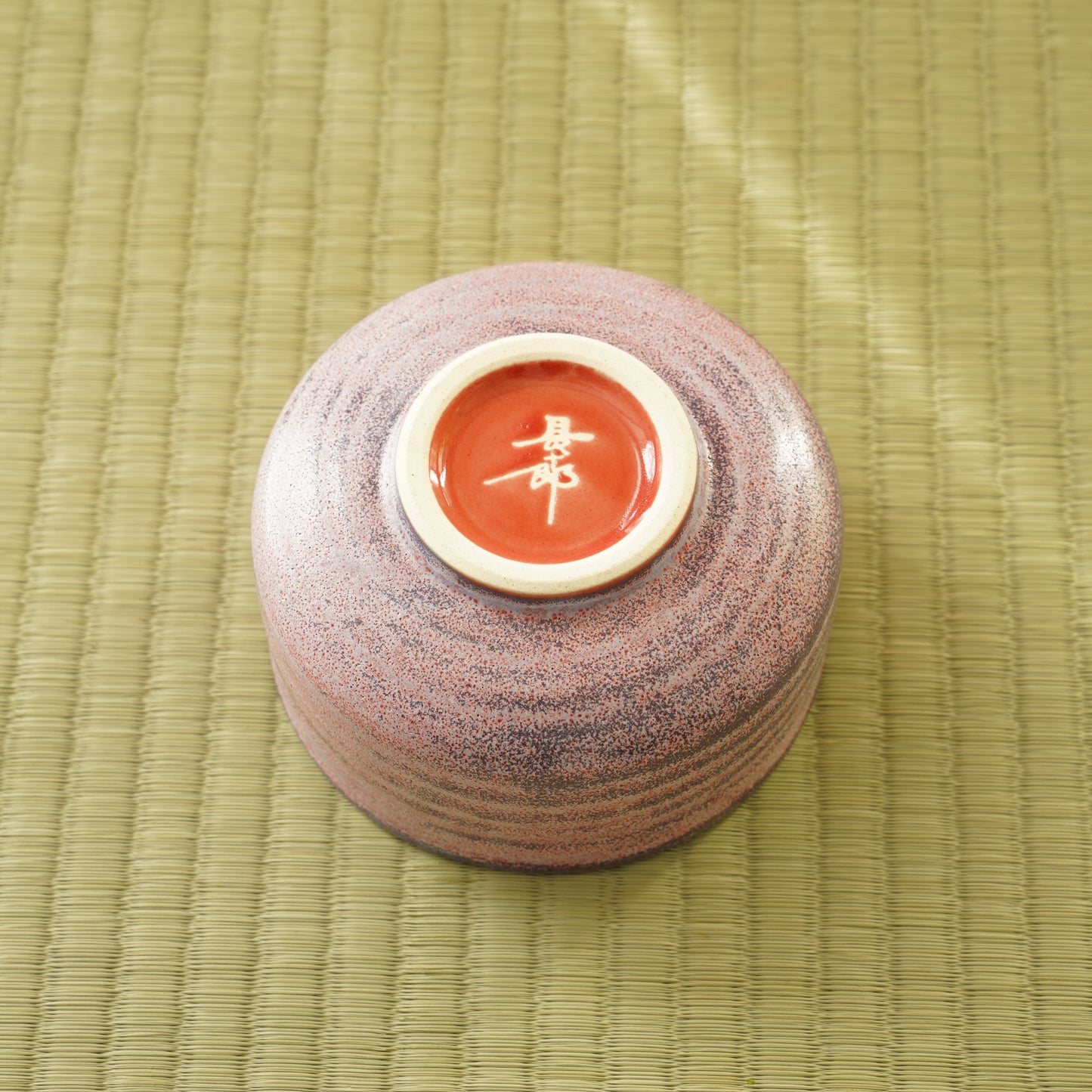
How it is made. Thrown from porcelain and glazed twice: an ume, plum-blossom, colour underneath and a muted coat over it. After firing, parts of the surface are deliberately rubbed back so the plum colour shows through, as if the bowl had been handled for years. It is the Japanese taste for things that look worn in, made on purpose.
Why this shape. The straight cylinder is the winter tea bowl. Its tall wall holds heat and hides the tea, so the drinker is not distracted; the wall is thinned so the bowl is light in the hand.
How it is used in Japan. A bowl for the coldest weeks of the year, when the plum is the first tree to flower over the snow. Used daily, rinsed, shelved. The wooden box is how a tea bowl is kept and given.
On your table. Matcha, and a fine bowl for soup, rice or a warm dessert in winter. Hand wash; no microwave.